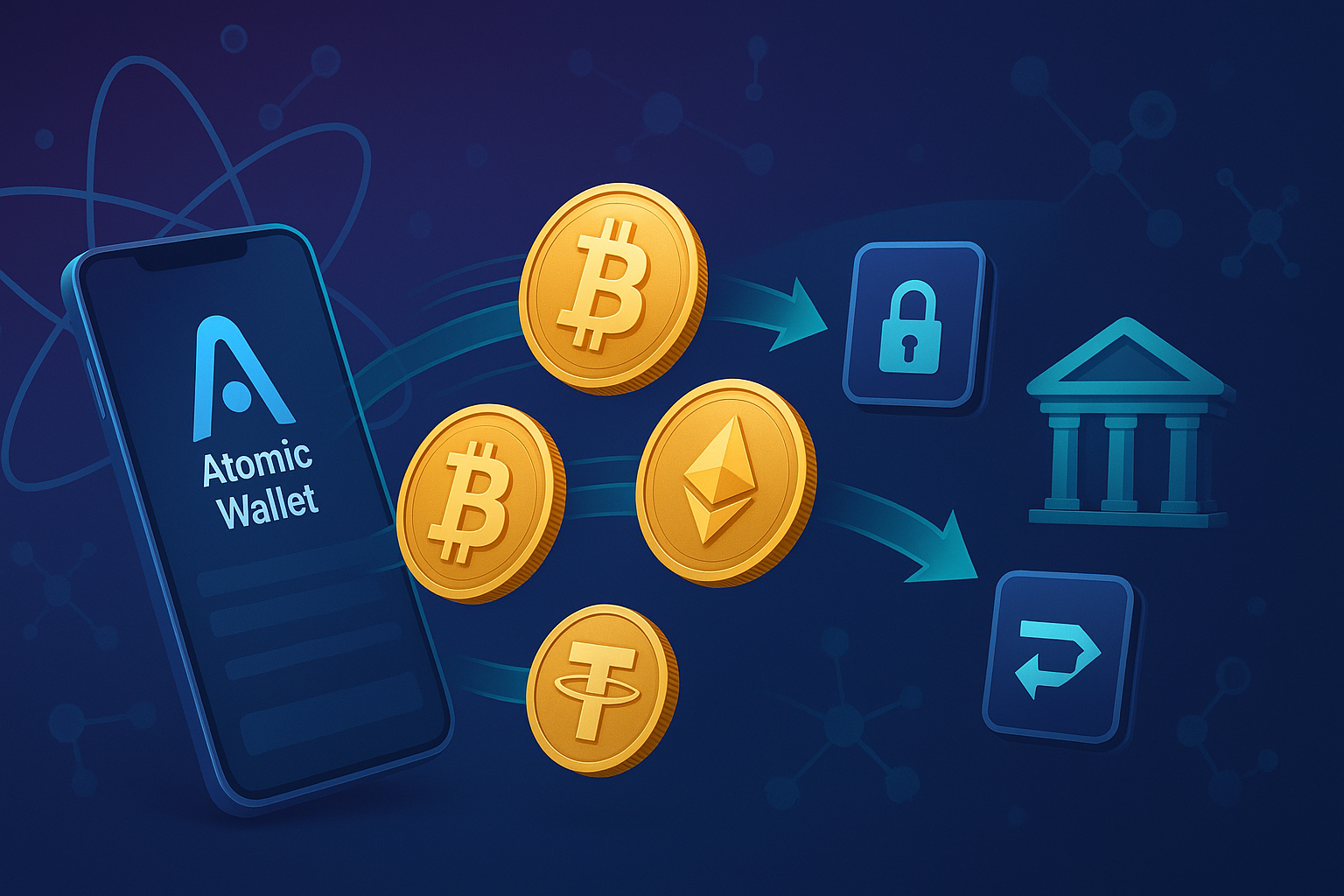
Atomic Wallet has established itself as one of the most popular non-custodial cryptocurrency wallets, serving over 10 million users worldwide with support for more than 1,000 digital assets. Understanding how to withdraw from Atomic Wallet is essential whether you want to move your cryptocurrency to another platform, convert it to cash, or simply maintain better control over your digital assets.
This comprehensive guide walks you through every aspect of withdrawing from Atomic Wallet, including detailed step-by-step instructions for transferring crypto to external wallets and exchanges, methods for converting your holdings to fiat currency, current network fees, processing times, and critical security best practices specifically for users in the United States.
Understanding Atomic Wallet Withdrawal Options
Before initiating any withdrawal, it helps to understand that Atomic Wallet operates as a non-custodial wallet, meaning you maintain complete control over your private keys and funds. This fundamental characteristic shapes how withdrawals work and what options are available to you.
Atomic Wallet does not support direct crypto-to-fiat conversions or bank account withdrawals. The platform focuses on cryptocurrency storage, sending, receiving, swapping, and buying functions. To access your funds as cash in your bank account, you must first transfer your cryptocurrency from Atomic Wallet to a centralized exchange that supports fiat withdrawals, such as Coinbase, Kraken, or Gemini.
Withdrawing from Atomic Wallet essentially means sending your cryptocurrency to another wallet address. This address could belong to another personal wallet you control, a centralized exchange where you plan to sell for fiat currency, a decentralized finance protocol, or another individual. The process remains fundamentally the same regardless of destination, though extra caution is warranted depending on where you send your funds.
How to Withdraw from Atomic Wallet to External Wallet
Transferring cryptocurrency from Atomic Wallet to another wallet represents the most straightforward withdrawal method. This process works whether you are sending funds to a hardware wallet like Ledger or Trezor, a software wallet like MetaMask or Trust Wallet, or another multi-currency wallet.
Step-by-Step Withdrawal Instructions
Step 1: Open the Atomic Wallet application on your device. The application works identically across desktop computers (Windows, Mac, Linux) and mobile devices (iOS, Android), so these instructions apply universally.
Step 2: Navigate to the Wallet tab where you can see your complete portfolio of cryptocurrencies. The interface displays all assets you hold with their current balances and USD equivalent values.
Step 3: Select the specific cryptocurrency you want to withdraw. Click or tap on the asset to open its dedicated page. For this example, we will use Bitcoin, but the process applies to all supported cryptocurrencies.
Step 4: Click the Send button on the cryptocurrency’s page. This opens the transaction interface where you will enter all withdrawal details.
Step 5: Enter the destination wallet address in the Address field. This address must be copied exactly from your receiving wallet. Use the copy-paste function rather than manual typing to eliminate transcription errors. Even a single incorrect character sends your funds to the wrong address with no possibility of recovery.
Step 6: Verify the blockchain network if applicable. Some cryptocurrencies exist on multiple blockchain networks. For example, USDT can be sent on Ethereum (ERC-20), Tron (TRC-20), Binance Smart Chain (BEP-20), and other networks. Always confirm your receiving wallet supports the specific network you select. Sending tokens to an incompatible network results in permanent loss.
Step 7: Enter the amount you want to withdraw. You can input the amount in cryptocurrency units or USD equivalent depending on your preference. The interface automatically converts between these values for your convenience.
Step 8: Review the network fee. Atomic Wallet does not charge extra transaction fees beyond the blockchain network fees paid to miners or validators. The displayed fee represents the actual cost of processing your transaction on the blockchain. Network fees fluctuate based on blockchain congestion and cannot be avoided regardless of which wallet you use.
Step 9: Adjust the fee if desired. For certain cryptocurrencies including Bitcoin, Litecoin, Ethereum, and Binance Smart Chain, you can customize the network fee using the Set Fee option. A slider allows you to choose between slow (lower fee, longer confirmation) and fast (higher fee, quicker confirmation) processing speeds. The default fee ensures confirmation within the next 1-2 blocks.
Step 10: Enter your Atomic Wallet password to authorize the transaction. This password encrypts your private keys and proves you have authorization to spend these funds.
Step 11: Confirm the transaction details one final time. Double-check the destination address, amount, network selection, and fee before proceeding. Once broadcast to the blockchain, transactions cannot be reversed or canceled.
Step 12: Click Send to broadcast your transaction. Atomic Wallet immediately sends your transaction to the blockchain network for processing. You will receive a transaction hash that you can use to track confirmation progress.
Tracking Your Withdrawal
After sending, your transaction appears in the History tab within Atomic Wallet. Click on the transaction to view detailed information including the transaction hash, timestamp, and current confirmation status. You can also click on the hash to open a blockchain explorer where you can monitor the transaction’s progress in real-time as it receives network confirmations.
Most cryptocurrencies require multiple confirmations before the receiving wallet considers the funds fully arrived. Bitcoin typically requires 3-6 confirmations, Ethereum requires 12-35 confirmations, and other networks have their own standards. Confirmation times vary from seconds to hours depending on the blockchain and network congestion levels.
How to Withdraw from Atomic Wallet to Bank Account
Since Atomic Wallet does not support direct fiat withdrawals, converting your cryptocurrency to cash in your bank account requires a multi-step process involving a centralized exchange.
Prerequisites for Bank Withdrawals
Choose a reputable centralized exchange that supports fiat withdrawals to US bank accounts. Popular options include Coinbase (available in over 100 countries), Kraken (US), and Gemini (US). Each exchange has different fee structures, supported cryptocurrencies, and verification requirements.
Create an account on your chosen exchange if you do not already have one. Complete the Know Your Customer verification process by providing identification documents, proof of address, and other required information. Link your bank account to the exchange through their designated process, typically using ACH connection or manual bank details entry.
Complete Process for Withdrawing to Bank
Step 1: Log into your centralized exchange account. Navigate to the deposit section and locate the cryptocurrency you want to withdraw from Atomic Wallet.
Step 2: Generate a deposit address on the exchange. Click the deposit or receive button for your chosen cryptocurrency. The exchange provides a wallet address specifically for receiving this asset. Copy this address carefully.
Step 3: Verify any additional requirements. Some exchanges require a memo, destination tag, or payment ID for certain cryptocurrencies like XRP, XLM, or EOS. If required, copy this information along with the wallet address. If sending to a standard cryptocurrency address without exchange-specific requirements, you can proceed without a memo.
Step 4: Return to Atomic Wallet and follow the standard withdrawal process outlined in the previous section. Paste the exchange’s deposit address into the Address field. If a memo is required, enter it in the appropriate field. Select the amount you want to send.
Step 5: Complete the withdrawal from Atomic Wallet to your exchange account. Wait for the required number of blockchain confirmations. Most exchanges display pending deposits in your account once the transaction is broadcast, even before full confirmation.
Step 6: Once the cryptocurrency arrives and confirms in your exchange account, navigate to the trading section. Sell your cryptocurrency for USD or your preferred fiat currency. Most exchanges offer market orders for immediate execution at current prices or limit orders where you specify your desired price.
Step 7: After selling, your fiat balance appears in your exchange account. Navigate to the withdrawal section and select your linked bank account as the destination. Enter the amount you want to withdraw to your bank.
Step 8: Submit the withdrawal request and complete any required security verification. Most US exchanges process ACH transfers within 1-5 business days. Your bank account will receive the funds during this timeframe.
Alternative Fiat Conversion Options
If you prefer to avoid traditional exchanges, consider peer-to-peer platforms like Paxful or Bisq that facilitate direct cryptocurrency-to-cash transactions between individuals. These platforms offer more privacy but typically involve higher fees and require careful vetting of trading partners.
Some payment processors and crypto debit card services allow you to spend cryptocurrency directly without converting to fiat first. While not technically a bank withdrawal, these services provide immediate access to your funds for purchases.
Withdrawal Fees and Cost Structure
Understanding the complete fee structure helps you minimize costs and plan your withdrawals efficiently.
Network Transaction Fees
Every blockchain transaction requires a network fee paid to miners or validators who process and confirm transactions. These fees vary dramatically by blockchain and current network conditions. Atomic Wallet displays the exact fee before you confirm any transaction.
Bitcoin network fees fluctuate based on mempool congestion. During periods of high demand, fees can range from a few dollars to over $20 for priority confirmation. Ethereum gas fees similarly vary, often costing $5-$50 for simple transfers and significantly more for complex smart contract interactions.
Alternative blockchains typically offer much lower fees. Binance Smart Chain transactions usually cost under $1, Tron transactions cost a few cents, and newer networks like Solana and Avalanche process transfers for fractions of a penny. When you control which network to use for multi-chain tokens, choosing lower-cost options saves substantial money.
The amount you send has no impact on the network fee size. Transferring $10 or $10,000 worth of cryptocurrency incurs the same network fee because miners charge based on transaction complexity and data size, not transfer value. This characteristic makes small withdrawals proportionally more expensive than large ones.
Exchange and Swap Fees
For crypto-to-crypto swaps within Atomic Wallet, the platform charges 0.5% plus partner exchange service commissions. Third-party providers like Changelly and Shapeshift process these exchanges and add their own fees on top of Atomic’s commission.
Buying cryptocurrency with a credit or debit card carries a flat 5% fee with a minimum of $10 per operation. Your card issuing bank may charge additional processing fees typically ranging from 2-5% because they consider cryptocurrency purchases high-risk transactions.
When withdrawing to a centralized exchange for fiat conversion, the exchange charges trading fees for selling your cryptocurrency and potentially withdrawal fees for ACH or wire transfers to your bank. These costs vary by platform but typically range from 0.1% to 0.5% for trading plus $0-$25 for bank withdrawals.
Minimizing Withdrawal Costs
Choose low-fee blockchain networks when multiple options exist for the same token. For example, sending USDT on Tron costs a fraction of sending the same stablecoin on Ethereum mainnet. Always verify your destination supports the network you select.
Consolidate multiple small withdrawals into fewer larger transactions. Since network fees remain constant regardless of amount, sending one larger sum costs the same as sending a tiny amount. Batching reduces your per-dollar cost significantly.
Monitor network conditions before initiating non-urgent withdrawals. Blockchain explorers and fee estimation tools show current congestion levels. Withdrawing during periods of lower activity results in substantially lower fees, potentially saving 50-75% compared to peak times.
For Ethereum and compatible networks, consider using Layer 2 scaling solutions like Polygon, Arbitrum, or Optimism when your destination supports them. These networks provide dramatically lower fees while maintaining security through their connection to Ethereum mainnet.
Security Best Practices for Withdrawals
Protecting your funds during the withdrawal process requires implementing multiple security layers and maintaining careful verification procedures.
Protect Your Private Keys and Seed Phrase
Atomic Wallet generates a 12-word backup phrase when you first create your wallet. This seed phrase provides complete access to all your funds and can restore your wallet on any device. Anyone who obtains this phrase can steal your entire cryptocurrency holdings without needing your password.
Never share your seed phrase with anyone under any circumstances. Store it offline in multiple secure physical locations such as a safe, safety deposit box, or other protected environment. Never store your seed phrase digitally in photos, cloud storage, email, or text messages where hackers could potentially access it.
Consider using metal backup plates specifically designed for seed phrase storage. These fireproof and waterproof solutions protect against physical disasters that could destroy paper backups. Several commercial products exist, or you can create your own solution using metal stamping tools.
Verify Every Transaction Detail
Double-check wallet addresses character by character before confirming any withdrawal. Some malware specifically targets cryptocurrency users by detecting copied wallet addresses and automatically replacing them with the attacker’s address. After pasting an address, manually verify several characters from the beginning, middle, and end match your intended destination.
Confirm you selected the correct blockchain network that matches your receiving wallet’s capabilities. Network mismatches represent one of the most common causes of lost cryptocurrency, and these mistakes are always permanent and irreversible.
Review the withdrawal amount carefully. Ensure you are not accidentally sending your entire balance when you intended to send a portion, or vice versa. Account for network fees when calculating your available balance.
Conduct Test Transactions
For large withdrawals or first-time transfers to new addresses, always send a small test amount first. Transfer just a few dollars worth of cryptocurrency to verify the address works correctly and your receiving wallet properly displays the funds. Once confirmed, proceed with confidence knowing your full withdrawal will succeed.
This practice costs an extra network fee but provides invaluable peace of mind and protection against costly errors. Consider it inexpensive insurance against the permanent loss of significant funds.
Recognize and Avoid Common Scams
Atomic Wallet support will never ask for your password, seed phrase, or private keys. Any communication requesting this information is a scam attempt. The Atomic Wallet team can provide guidance and troubleshooting but never requires access to your wallet credentials.
Be wary of fake Atomic Wallet applications and phishing websites. Always download the wallet directly from the official atomicwallet.io website or verified app stores. Check website URLs carefully before entering any sensitive information, as scammers create convincing fake sites with subtle spelling variations.
Avoid responding to unsolicited direct messages on social media from accounts claiming to be Atomic Wallet support. Scammers frequently impersonate official support channels to trick users into revealing sensitive information. Always initiate support conversations through official channels.
Never send cryptocurrency to “verify” your wallet, unlock withdrawals, or fix technical problems. These are always scams. Legitimate blockchain operations never require you to send funds to enable withdrawals or resolve issues.
Securing Your Device
Install reputable antivirus and anti-malware software on devices where you access Atomic Wallet. Keep all software updated with the latest security patches. Avoid accessing your wallet on public or shared computers where keyloggers or screen capture malware might be present.
Consider using a dedicated device exclusively for cryptocurrency management if you hold significant value. This air-gapped approach provides an extra security layer by isolating your wallet from potentially compromised devices used for general internet browsing and email.
Enable device encryption, screen locks, and biometric authentication where available. These protections prevent unauthorized access if your device is lost or stolen. Remember that physical access to an unlocked device potentially grants complete access to your funds.
Troubleshooting Common Withdrawal Issues
Several factors can delay or prevent withdrawals from processing successfully. Understanding these issues helps you resolve problems quickly and avoid panic.
Transaction Pending or Stuck
Blockchain transactions sometimes remain pending for extended periods, especially during network congestion. If you set the network fee too low, miners may deprioritize your transaction in favor of higher-paying transactions. Bitcoin and Ethereum transactions can remain unconfirmed for hours or even days when fees are insufficient.
For Bitcoin, you can use BTC.COM service to make a paid request for miners to prioritize your stuck transaction. This acceleration service costs additional fees but can rescue transactions that would otherwise remain pending indefinitely.
Alternatively, wait for network congestion to subside. During quieter periods, miners process even low-fee transactions as the mempool clears. Check blockchain explorers to monitor your transaction status and current network conditions.
Some blockchains allow transaction replacement with higher fees. This replace-by-fee feature lets you resubmit the same transaction with increased fees to encourage faster processing. Not all cryptocurrencies support this capability.
Insufficient Balance for Network Fees
One of the most common withdrawal problems occurs when you attempt to send your entire balance without accounting for network fees. For example, if you hold exactly 0.1 ETH and try to send 0.1 ETH, the transaction fails because you need additional ETH to cover gas fees.
Always maintain a small buffer of each cryptocurrency to cover network fees. If you hold tokens on Ethereum, Binance Smart Chain, or other platforms, you need the native blockchain currency (ETH, BNB, etc.) to pay transaction fees even when sending tokens.
Atomic Wallet offers a Claim service for certain assets where the team covers network fees if you lack sufficient funds for token swaps. This feature helps users exit positions when they cannot otherwise afford the gas costs, though it should not be relied upon as a primary solution.
Wrong Network Selection
Sending cryptocurrency to an address on an incompatible network represents a permanent loss in most cases. For example, sending ERC-20 tokens to a Bitcoin address destroys those funds because Bitcoin addresses cannot interact with Ethereum-based tokens.
Similarly, sending USDT on the Tron network to an address expecting USDT on Ethereum results in loss. While both use USDT, the different blockchain networks are not interoperable without specialized bridge services.
Unfortunately, recovering cryptocurrency sent to wrong networks is usually impossible. Some exchanges and wallet providers offer recovery services for substantial fees, but success is not guaranteed. Prevention through careful verification is the only reliable protection.
Minimum Withdrawal Requirements
Some cryptocurrencies and receiving platforms impose minimum deposit or withdrawal amounts. If you attempt to send less than this threshold, the transaction may fail or the receiving platform may not credit your account.
Check your destination platform’s requirements before initiating withdrawals. Centralized exchanges typically publish minimum deposit amounts for each supported cryptocurrency. Ensure your withdrawal amount exceeds these minimums to avoid complications.
Memo or Tag Missing
Certain cryptocurrencies including XRP, XLM, EOS, and others require an additional memo, destination tag, or payment ID for exchange deposits. This identifier helps the exchange route your deposit to your specific account among thousands of users sharing the same deposit address.
If you forget to include the required memo when sending to an exchange, your funds may arrive but remain unallocated to your account. Contact the exchange’s support team immediately. Many exchanges can manually credit deposits with missing memos, though this process takes time and may incur fees.
For personal wallets that do not use memos, you can leave this field blank or select the “no memo required” option when available.
Understanding Atomic Wallet’s Non-Custodial Model
Atomic Wallet’s fundamental design as a non-custodial wallet significantly impacts how withdrawals work compared to centralized platforms.
You Control Your Keys and Funds
As a non-custodial decentralized wallet, you own your backup phrase and private keys, giving you complete control over your funds. Atomic Wallet never takes custody of your cryptocurrency, stores your private keys on their servers, or has any ability to freeze, seize, or access your funds.
This control provides significant advantages including privacy, censorship resistance, and protection against exchange hacks or bankruptcy. However, it also places complete responsibility on you for security and recovery. If you lose your seed phrase, nobody can help you regain access to your funds.
No Approval Process for Withdrawals
Unlike centralized exchanges that review and approve withdrawal requests, Atomic Wallet withdrawals process immediately once you confirm the transaction. No company or support team intervenes in the process. Your transaction broadcasts directly to the blockchain network as soon as you enter your password.
This immediacy offers convenience but eliminates the safety net of withdrawal approval queues that might catch unauthorized transactions. The burden of verification falls entirely on you before confirming any send transaction.
Blockchain Transactions are Irreversible
Once a transaction receives blockchain confirmations, it becomes permanent and irreversible. No authority can undo the transaction, reverse it, or return funds sent to incorrect addresses. This immutability provides security and trust in the blockchain but means mistakes are unforgiving.
Always treat cryptocurrency withdrawals with the same care you would treat handing physical cash to a stranger. Once the transaction confirms, the funds are gone from your control.
Comparing Withdrawal Methods
Different withdrawal scenarios require different approaches. Understanding when to use each method helps you choose the most efficient path.
Direct Wallet-to-Wallet Transfers
Sending cryptocurrency directly from Atomic Wallet to another personal wallet you control represents the simplest and fastest withdrawal method. You pay only the network fee and maintain complete control throughout the process.
This method works well for long-term holders moving funds to cold storage, users consolidating cryptocurrency across multiple wallets, or anyone sending funds to participate in decentralized finance protocols or NFT marketplaces.
Transfers to Centralized Exchanges
Sending cryptocurrency from Atomic Wallet to centralized exchanges provides access to fiat conversion, trading for other cryptocurrencies not supported by Atomic’s swap feature, and additional services like staking or lending programs.
This path involves extra steps including account creation, identity verification, and exchange-specific deposit procedures. However, it remains necessary for anyone who wants to convert cryptocurrency to traditional currency in their bank account.
Peer-to-Peer Direct Transfers
Sending cryptocurrency directly to another individual for payment or personal transfers offers maximum privacy and minimal intermediaries. You simply need the recipient’s wallet address and can complete the transaction immediately.
Exercise caution when sending to individuals you do not know personally. Cryptocurrency transactions are irreversible, so sending funds for goods or services without proper escrow or protection mechanisms carries significant risk of fraud.
Special Considerations for US Users
Users in the United States face specific considerations when withdrawing from Atomic Wallet and converting to fiat currency.
Tax Implications
The IRS treats cryptocurrency as property for tax purposes. Every disposition of cryptocurrency, including selling for fiat or exchanging for other cryptocurrencies, potentially creates a taxable event requiring reporting on your tax return.
Maintain detailed records of all withdrawals, conversions, and sales including dates, amounts, and USD values at the time of each transaction. Numerous cryptocurrency tax software solutions can help track your transactions and generate required tax forms.
Consult with a tax professional familiar with cryptocurrency taxation to ensure compliance with all reporting requirements. Tax obligations apply whether or not you receive a 1099 form from exchanges you use.
Choosing US-Compatible Exchanges
Not all centralized exchanges accept US customers or support US bank withdrawals. Focus on well-established platforms with clear US operations including Coinbase, Kraken, Gemini, and others that maintain regulatory compliance and support ACH transfers to US banks.
Some states impose additional restrictions on cryptocurrency services. Verify that your chosen exchange serves residents of your specific state before beginning the verification process.
Banking Relationships
Some traditional banks maintain hostile relationships with cryptocurrency users, refusing transfers from exchanges, closing accounts, or imposing additional scrutiny on cryptocurrency-related transactions. Research your bank’s cryptocurrency policies before attempting large withdrawals.
Consider establishing an account with a cryptocurrency-friendly bank or credit union if your primary bank creates difficulties. Several financial institutions have explicitly embraced digital assets and provide smooth experiences for customers who regularly move funds between crypto platforms and traditional banking.
Advanced Withdrawal Strategies
Experienced users employ several strategies to optimize their withdrawal processes for cost and efficiency.
Network Fee Management
During periods of extreme network congestion, consider swapping your cryptocurrency to an asset on a lower-cost blockchain before withdrawing. For example, converting Ethereum-based tokens to their Binance Smart Chain equivalents before withdrawal can save substantial gas fees.
This strategy adds a swap fee but potentially saves more in reduced network costs, especially for smaller withdrawal amounts where percentage-based fees matter less than fixed network fees.
Timing Your Withdrawals
Blockchain network fees follow predictable patterns based on global usage trends. Ethereum gas fees typically peak during US and European business hours when trading activity is highest, while weekends and early morning hours UTC see reduced congestion.
Planning non-urgent withdrawals during off-peak periods can reduce network fees by 50-75% compared to peak times. Several websites track historical fee patterns to help you identify optimal withdrawal windows.
Using Multiple Paths
For users regularly moving funds between Atomic Wallet and exchanges, maintaining small balances of network fee tokens on multiple blockchains provides flexibility. Keeping small amounts of ETH, BNB, MATIC, and other network tokens ensures you can always complete withdrawals without being blocked by insufficient fees.
This diversification allows you to choose the most cost-effective withdrawal path based on current network conditions rather than being locked into a single high-fee option.
Conclusion
Withdrawing from Atomic Wallet requires understanding the platform’s non-custodial architecture and blockchain transaction fundamentals. While the wallet does not support direct fiat withdrawals, you can easily send cryptocurrency to external wallets or exchanges for conversion to cash.
The withdrawal process itself is straightforward: select your cryptocurrency, enter the destination address, confirm the amount and network, verify all details carefully, and authorize the transaction. Network fees vary significantly by blockchain, so choosing cost-effective networks when options exist saves money.
Security must be your top priority throughout the withdrawal process. Verify addresses character by character, conduct test transactions for large amounts or new destinations, protect your seed phrase absolutely, and never share wallet credentials with anyone claiming to provide support.
For US users seeking to convert cryptocurrency to cash, the path involves transferring from Atomic Wallet to a regulated centralized exchange, selling for fiat currency, and withdrawing to your linked bank account via ACH transfer. This multi-step process takes 2-5 business days total but provides legitimate access to your funds in traditional banking.
With careful attention to detail and proper security practices, withdrawing from Atomic Wallet becomes a routine and secure process for managing your cryptocurrency holdings.
Frequently Asked Questions
How do I withdraw money from my Atomic Wallet?
To withdraw from Atomic Wallet, open the app, select the cryptocurrency you want to send, tap the Send button, enter the destination wallet address, specify the amount, review the network fee, and confirm the transaction with your password. The withdrawal processes immediately and appears on the blockchain within seconds to minutes depending on network conditions.
Can I withdraw directly from Atomic Wallet to my bank account?
No, Atomic Wallet does not support direct bank account withdrawals or crypto-to-fiat conversions. To access your funds as cash, first send your cryptocurrency from Atomic Wallet to a centralized exchange that supports fiat withdrawals like Coinbase, Kraken, or Gemini. Then sell your crypto for USD on the exchange and withdraw to your bank account via ACH transfer.
What are the fees to withdraw from Atomic Wallet?
Atomic Wallet does not charge withdrawal fees beyond standard blockchain network fees paid to miners or validators. Network fees vary by cryptocurrency and current blockchain congestion, ranging from a few cents on networks like Tron and Binance Smart Chain to several dollars or more on Bitcoin and Ethereum during busy periods. The exact fee displays before you confirm any transaction.
Why is my Atomic Wallet withdrawal pending?
Withdrawals remain pending when the blockchain network is congested and miners have not yet confirmed your transaction. If you set the network fee too low, miners may prioritize higher-paying transactions first, causing extended delays. Most transactions confirm within minutes to hours, but severely underpriced transactions can remain pending for days. Wait for network congestion to clear or use transaction acceleration services if available for your cryptocurrency.
How long does it take to withdraw from Atomic Wallet?
The withdrawal broadcasts immediately from Atomic Wallet once you confirm the transaction. Actual receipt time depends on blockchain confirmation requirements. Bitcoin typically takes 30-60 minutes for sufficient confirmations, Ethereum takes 5-15 minutes, and faster blockchains like Binance Smart Chain and Solana confirm in seconds. The receiving platform determines how many confirmations they require before crediting your account.
Is it safe to withdraw from Atomic Wallet?
Yes, withdrawing from Atomic Wallet is safe when you follow proper security practices. Always verify destination addresses carefully, enable all security features on your device, protect your seed phrase offline, and conduct test transactions for large amounts. Atomic Wallet stores your private keys only on your device encrypted with your password. The platform itself never has access to your funds and cannot block or reverse your transactions.
Can I cancel a withdrawal from Atomic Wallet?
No, once a withdrawal broadcasts to the blockchain network, it cannot be canceled. Blockchain transactions are irreversible by design. Before the transaction broadcasts, you can close the app or restart your device to prevent it from sending. After broadcasting, the transaction will process and cannot be undone. This is why careful verification before confirming is essential.
What happens if I send crypto to the wrong address?
Sending cryptocurrency to an incorrect address usually results in permanent loss. Blockchain transactions are irreversible, and there is no customer service or authority who can retrieve or return funds. If you sent to an address you control, you can access the funds using that wallet’s private keys. If sent to someone else’s address or an incompatible network, the cryptocurrency is lost. Always double-check addresses and conduct test transactions for new destinations.
Do I need to verify my identity to withdraw from Atomic Wallet?
No, Atomic Wallet does not require identity verification or KYC for any withdrawal functions. As a non-custodial wallet, Atomic Wallet operates without collecting user information. However, if you send cryptocurrency to a centralized exchange to convert to fiat, that exchange will require identity verification before allowing fiat withdrawals to your bank account.
Why do I need network fees to withdraw tokens?
Token withdrawals on networks like Ethereum, Binance Smart Chain, and Tron require the native blockchain currency (ETH, BNB, TRX) to pay network fees. Even though you are sending tokens, the blockchain requires gas fees paid in its native coin. You must maintain a small balance of these native tokens to cover transaction costs whenever you send token assets on their respective networks.