Author: Steaven Hawk, Founder & Editor-in-Chief | Hi Tech Blogging |
Last Updated: April 18, 2026 |
Reading Time: ~13 minutes |
Based on: Hands-on testing at Bitcoin ATMs across Florida, Los Angeles, and Chicago + data from Coin ATM Radar
- Go to coinatmradar.com or search “Bitcoin ATM near me” on Google Maps
- Filter by two-way machines if you want to sell as well as buy
- Bring your phone (for wallet QR code), a valid photo ID, and cash
- Expect fees of 7–20% — always check the machine’s rate screen before inserting money
- Transactions under $900 typically require only a phone number; above $900–$3,000 require a photo ID
I’ve personally used Bitcoin ATMs in Florida, Los Angeles, and Chicago — at convenience stores, gas stations, and shopping malls — to verify every step in this guide. What I found surprised me: the experience varies enormously between operators. Some machines are fast and straightforward. Others have confusing interfaces, surprise fees not shown upfront, and verification steps that take 10 minutes for a $50 transaction.
As of April 2026, there are over 38,000 Bitcoin ATMs operating across the United States — more than any other country in the world. Finding one near you takes seconds. Using one intelligently — knowing the fees, the limits, the scams to avoid, and how to get the best rate — takes the kind of real-world experience this guide covers.
Whether you’re buying your first Bitcoin with cash or looking for the most cost-effective way to convert crypto to cash, this is the most complete and current Bitcoin ATM guide available.
- What Is a Bitcoin ATM and How Does It Work?
- How to Find the Nearest Bitcoin ATM (5 Methods)
- How to Use a Bitcoin ATM: Step-by-Step (Buy & Sell)
- Bitcoin ATM Fees Explained: What You’ll Actually Pay in 2026
- Major Bitcoin ATM Operators Compared
- ID and Verification Requirements
- What Wallet Do You Need? (And Which to Use)
- Safety, Scam Avoidance & Security Tips
- Where Are Bitcoin ATMs Located? (Best Places to Look)
- US Regulations & State-by-State Considerations
- Bitcoin ATM Alternatives: When to Use a Different Method
- Frequently Asked Questions
1. What Is a Bitcoin ATM and How Does It Work?
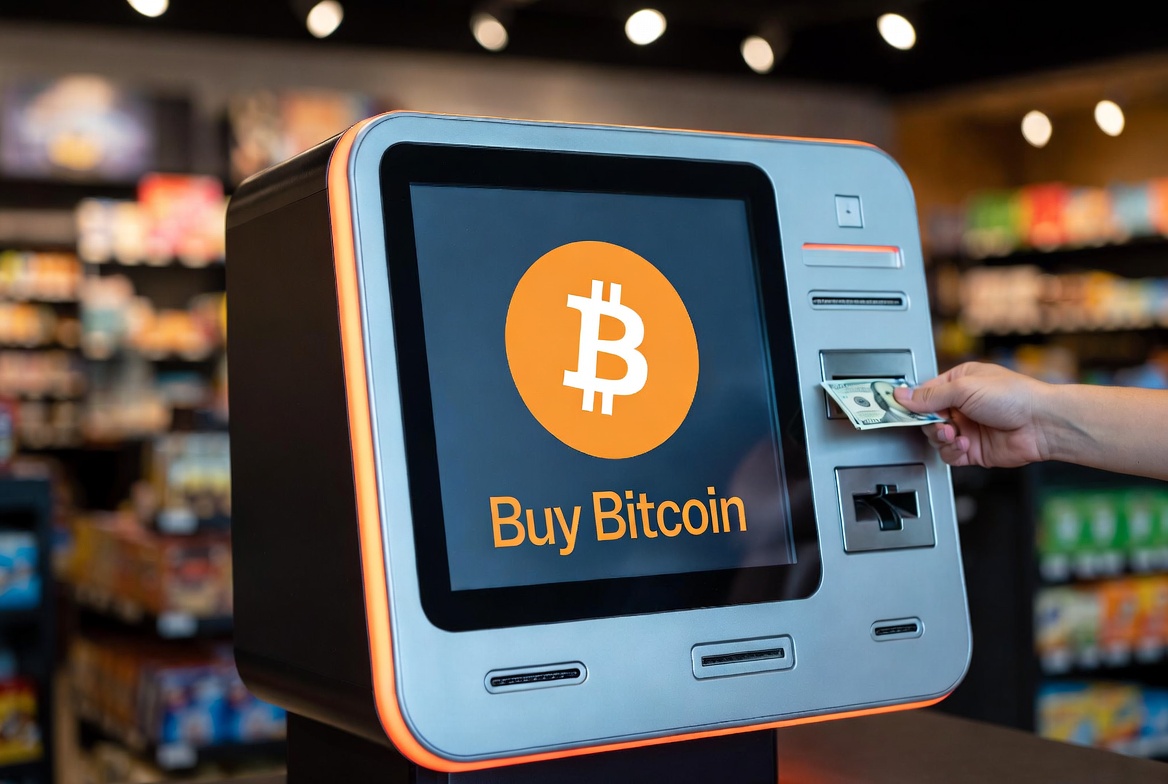
A Bitcoin ATM (also called a BTM or Bitcoin Teller Machine) is a physical kiosk that lets you buy or sell Bitcoin and other cryptocurrencies using cash or a debit card. They look similar to traditional bank ATMs but connect to a cryptocurrency exchange rather than a bank network.
Here’s what happens when you use one:
- Buying Bitcoin: You insert cash (or swipe a debit card on machines that support it), verify your identity as required, enter your wallet address by scanning a QR code, and the machine sends Bitcoin to your wallet within minutes. No exchange account required.
- Selling Bitcoin: On two-way machines, you send Bitcoin from your wallet to the machine’s address, confirm the transaction, and the machine dispenses cash — usually after the required blockchain confirmations (which can take 10–60 minutes for Bitcoin).
The key difference from an online exchange: Bitcoin ATMs are immediate, anonymous for small amounts, and require no account creation. The trade-off is significantly higher fees — typically 7–20% compared to 0.1–1.5% on an exchange like Coinbase or Kraken.
One-Way vs. Two-Way Bitcoin ATMs
| Type | What It Does | Availability |
|---|---|---|
| One-way (buy only) | Insert cash → receive Bitcoin in your wallet | ~60% of all machines |
| Two-way (buy & sell) | Buy Bitcoin with cash OR sell Bitcoin for cash | ~40% of all machines |
Always check whether your target machine is one-way or two-way before making the trip — this is shown on Coin ATM Radar’s listing for each machine.
2. How to Find the Nearest Bitcoin ATM (5 Methods)
Method 1 — Coin ATM Radar (Best Option)
coinatmradar.com is the largest and most accurate Bitcoin ATM locator in the world, tracking over 38,000 machines across 75+ countries. It shows you the operator name, supported cryptocurrencies, whether it’s one-way or two-way, current fee percentage, hours, and user reviews. This is the first place to check — it is far more detailed than any other locator.
Method 2 — Google Maps
Search “Bitcoin ATM near me” on Google Maps. This is the fastest method when you’re already on the go. The results pull from Google’s business listings, which often include hours and photos. The limitation: fee and machine-type details are not shown, so you’ll need to cross-reference with Coin ATM Radar.
Method 3 — Operator Apps and Websites
The major Bitcoin ATM networks each have their own locator tools. If you already know which operator has machines in your area (see Section 5 for the full operator comparison), using their app gives you the most accurate real-time machine status, including whether a specific unit is currently operational.
Method 4 — Local Crypto Community Groups
Reddit communities like r/Bitcoin and r/CryptoCurrency, plus local Telegram and Discord groups, often have updated information on new machine installations and which machines to avoid due to high fees or reliability issues. This is especially useful in smaller cities where Coin ATM Radar listings may be out of date.
Method 5 — Ask at Convenience Stores and Gas Stations
In the US, the majority of Bitcoin ATMs are located in convenience stores, gas stations, and grocery stores. If you see a BTM network sticker on a store’s window — common with Bitcoin Depot, Coinstar Exchange, and CoinFlip — the machine is almost certainly inside. Many 7-Elevens, Circle K, and Sheetz locations now carry Bitcoin ATMs.
3. How to Use a Bitcoin ATM: Step-by-Step Guide
What to Bring
- Your phone — with a Bitcoin wallet app open and your receiving address ready as a QR code
- Cash — most machines are cash-only; some accept debit cards (check the machine listing before going)
- Valid photo ID — required for transactions above $900 at most operators
- Your phone number — needed for SMS verification even on small transactions
How to Buy Bitcoin at an ATM (Step-by-Step)
- Select your language and choose “Buy Bitcoin” on the home screen. Some machines also offer Ethereum, Litecoin, or other cryptocurrencies — select Bitcoin unless you specifically want another coin.
- Enter your phone number. The machine sends a verification code via SMS. Enter the code to proceed. This is required at virtually all machines regardless of transaction size.
- Complete ID verification if required. For transactions under $900, most operators only need your phone number. For $900–$10,000+, you’ll scan your driver’s licence or passport using the machine’s built-in camera. See Section 6 for the full breakdown.
- Scan your wallet QR code. Open your Bitcoin wallet app (Coinbase, Trust Wallet, BlueWallet, or any wallet that generates a QR address) and show the QR code to the machine’s scanner. The machine reads your receiving address — this is where your Bitcoin will be sent. Double-check the address on screen before proceeding.
- Insert your cash. Feed bills into the machine one at a time. The screen shows the current exchange rate and the amount of Bitcoin you will receive as you insert cash. The rate shown already includes the machine’s fee — what you see on screen is what you get.
- Review the transaction summary. Before confirming, you’ll see the exact Bitcoin amount, the exchange rate, and the fee. Review this carefully — you cannot cancel after confirming.
- Confirm and collect your receipt. Press confirm. The machine broadcasts the transaction to the Bitcoin network. Save your receipt — it contains the transaction ID you can use to verify the transfer on a blockchain explorer.
- Wait for your Bitcoin to arrive. Bitcoin ATM transactions typically appear in your wallet within 10–30 minutes. Some operators send the funds instantly (using a zero-confirmation mechanism for small amounts); others wait for one blockchain confirmation, which can take 30–60 minutes.
How to Sell Bitcoin at an ATM (Step-by-Step)
- Select “Sell Bitcoin” on the home screen — only available on two-way machines.
- Complete phone and ID verification as required for the amount you’re selling.
- Enter the amount of Bitcoin you want to sell (in USD or BTC).
- The machine provides a unique Bitcoin address to send your funds to. Scan the QR code with your wallet app and send exactly the amount specified.
- Wait for blockchain confirmations. The machine will dispense cash once the required number of confirmations is received — this typically takes 10–60 minutes for Bitcoin. Some operators issue a redemption code by SMS so you can collect cash at a later time instead of waiting at the machine.
- Collect your cash from the machine’s dispenser when prompted.
4. Bitcoin ATM Fees Explained: What You’ll Actually Pay in 2026
Bitcoin ATM fees are the most important thing to understand before using a machine. They are significantly higher than online exchanges — this is the price of convenience, anonymity, and instant access.
Current Average Fees by Operator Type (2026)
| Fee Range | What It Means | Typical Operators |
|---|---|---|
| 5–8% | Low — excellent for a Bitcoin ATM | CoinFlip, Bitcoin Well |
| 8–12% | Average — typical for most US machines | Bitcoin Depot, Coin Cloud |
| 12–20% | High — avoid if possible | Many independent operators |
| 20%+ | Excessive — use a different machine | Some airport and hotel machines |
How to Calculate Your True Cost
If you insert $100 cash at a machine charging 10% fee, you receive approximately $90 worth of Bitcoin at the current market rate. On a $500 transaction at 10%, you lose $50 to fees. This is why checking the fee on Coin ATM Radar before visiting the machine — and choosing the lowest-fee operator in your area — can save you meaningful money.
4 Tips to Reduce Your Bitcoin ATM Fees
- Use Coin ATM Radar’s fee filter. Set the maximum fee to 8% and find machines near you that fall within that range. CoinFlip machines consistently offer the lowest fees in the US market.
- Check for operator promotions. Some operators (Bitcoin Depot, CoinFlip) run first-time user promotions with reduced fees. Check their website or app before your first transaction.
- Transact in larger amounts. Many machines charge a lower percentage for larger transactions — a machine that charges 12% on $50 may charge 8% on $500. Check the fee schedule on the machine’s screen before inserting money.
- Avoid airport, hotel, and tourist-area machines. These locations consistently carry the highest markups — sometimes 18–25%. Machines in suburban convenience stores and gas stations almost always have lower fees.
5. Major Bitcoin ATM Operators Compared (2026)
| Operator | US Machines | Avg. Fee | Coins Supported | Two-Way? | Best For |
|---|---|---|---|---|---|
| Bitcoin Depot | 8,000+ | 10–14% | BTC, ETH, LTC | Some | Widest location coverage |
| CoinFlip | 4,500+ | 6–9% | BTC, ETH, LTC, DOGE, USDC +more | Yes | Lowest fees in the US |
| Coinstar Exchange | 3,000+ | 10–15% | BTC only | No (buy only) | Grocery store locations |
| Bitcoin Well | 500+ | 5–8% | BTC, ETH | Yes | Low fees, US & Canada |
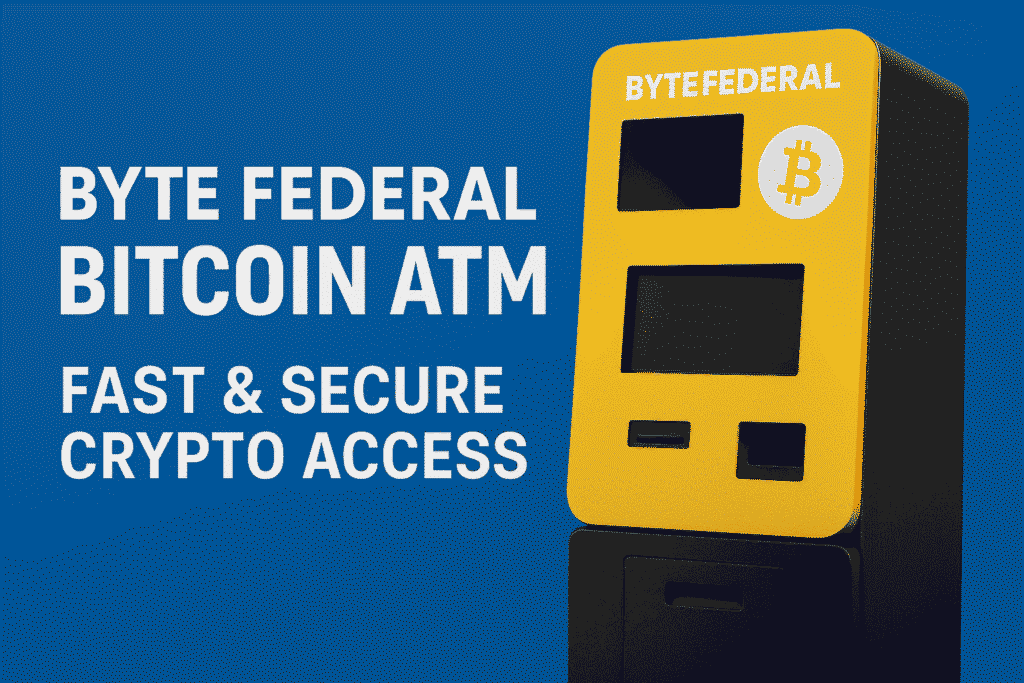
| Byte Federal | 1,200+ | 9–13% | BTC, ETH, LTC, DOGE + others | Yes | Multi-coin, US-wide |
| HODL Bitcoin ATM | 400+ | 8–12% | BTC, ETH, LTC | Yes | Regional operator |
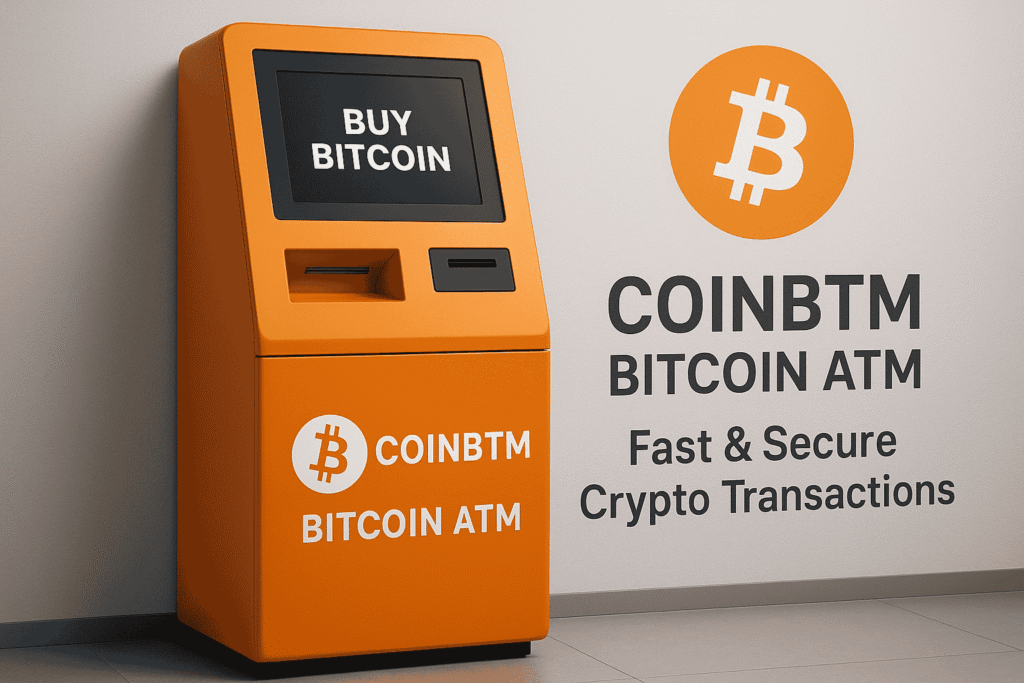
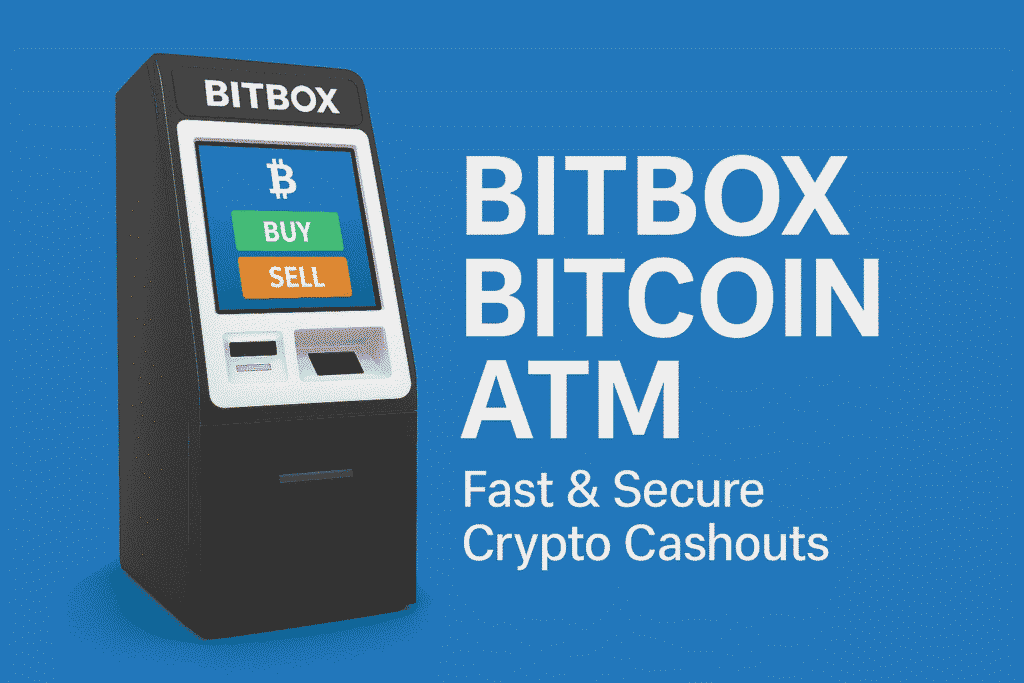
For detailed guides on specific operators we’ve reviewed: Byte Federal Bitcoin ATM review, HODL Bitcoin ATM review, CoinBTM review, and BitBox Bitcoin ATM review.
6. ID and Verification Requirements
Bitcoin ATM verification requirements are set by FinCEN (Financial Crimes Enforcement Network) regulations, which require all Bitcoin ATM operators to implement Know Your Customer (KYC) procedures. Here is how the tiers work in practice across most US operators:
| Transaction Amount | Typical Verification Required |
|---|---|
| Up to $900 | Phone number + SMS verification code only |
| $900 – $3,000 | Phone number + government-issued photo ID (driver’s licence or passport scan) |
| $3,000 – $10,000 | Phone number + photo ID + palm vein or biometric scan (on equipped machines) |
| Above $10,000 | Full KYC including ID, biometric, source of funds documentation — may require advance registration with the operator |
7. What Bitcoin Wallet Do You Need?
You need a self-custody Bitcoin wallet — one where you control the private keys — to receive Bitcoin from an ATM. You cannot send Bitcoin from a Bitcoin ATM to an exchange account like Coinbase or Kraken directly, as most exchanges do not display their deposit addresses as simple QR codes at the level needed.
The best free wallets for Bitcoin ATM use in 2026:
| Wallet | Type | Best For | Cost |
|---|---|---|---|
| BlueWallet | Mobile (Bitcoin only) | Bitcoin ATM beginners — simplest QR display | Free |
| Trust Wallet | Mobile (multi-coin) | Multi-cryptocurrency ATM users | Free |
| Coinbase Wallet | Mobile (self-custody) | Users who also use Coinbase exchange | Free |
| Electrum | Desktop (Bitcoin only) | Advanced users managing large amounts | Free |
| Ledger / Trezor | Hardware wallet | Long-term holders securing large amounts from ATM | $49–$179 |
If you’re planning to keep significant amounts of Bitcoin long-term, moving it from a mobile wallet to a hardware wallet like Ledger or a Trezor is strongly recommended after your purchase. Mobile wallets on internet-connected phones are vulnerable to malware. Hardware wallets keep your private keys offline permanently. For a full comparison of your options, our guide to protecting your seed phrase covers the essential security steps after any significant crypto purchase.
8. Safety, Scam Avoidance & Security Tips
Bitcoin ATM scams are a serious and growing problem. The FTC reported that in 2024, Americans lost over $120 million to Bitcoin ATM scams — the vast majority involving social engineering, not technical hacks. Understanding how these scams work is the single most effective protection.
🚨 The Most Common Bitcoin ATM Scams (2026)
1. Government/utility impersonation scams: Someone calls you claiming to be from the IRS, Social Security Administration, or your power company. They say you owe a debt that must be paid immediately via Bitcoin ATM to avoid arrest or service disconnection. No legitimate government agency or utility company will ever ask you to pay via Bitcoin ATM. This is always a scam.
2. Romance scams: A person you’ve met online — on a dating app, social media, or gaming platform — eventually asks you to send them money via Bitcoin ATM, often citing an emergency. This is a well-documented and common fraud pattern.
3. “You’ve won a prize” scams: You receive a message saying you’ve won a lottery, sweepstakes, or cash prize — but must pay a “fee” via Bitcoin ATM to claim it. Legitimate prizes never require a fee to collect.
4. Tech support scams: A pop-up on your computer claims your device is hacked and directs you to call a number. The “technician” tells you to withdraw cash and deposit it into a Bitcoin ATM. Microsoft, Apple, and all legitimate tech companies never do this.
✅ Personal Safety Tips at Bitcoin ATM Locations
- Use machines in well-lit, busy locations — inside convenience stores or shopping centres rather than isolated kiosks
- Be aware of your surroundings; do not count cash or display large amounts of money near the machine
- Decline help from strangers who approach you near the machine — this is a common tactic used to watch your PIN or wallet address
- Triple-check the wallet address on screen before confirming — Bitcoin transactions are irreversible
- Keep your transaction receipt until the Bitcoin arrives in your wallet
- If anything about the situation feels wrong, walk away — you are never obligated to complete a transaction
9. Where Are Bitcoin ATMs Located? (Best Places to Look)
In the US, Bitcoin ATMs are predominantly located in the following venue types, in order of concentration:
- Convenience stores (7-Eleven, Circle K, Sheetz, Wawa) — the most common location type
- Gas stations — especially along major highways and in suburban areas
- Grocery stores — Coinstar Exchange kiosks appear in many major grocery chains
- Vape shops and smoke shops — unexpectedly common locations for Bitcoin ATMs
- Check cashing and payday loan stores — high foot traffic from cash-carrying customers
- Shopping malls — typically near food courts or entrances
- Laundromats and car washes
The states with the highest Bitcoin ATM density are California, Texas, Florida, New York, and Illinois. We’ve published detailed local guides for some of the most ATM-dense cities: Bitcoin ATMs in Los Angeles, Bitcoin ATMs in Chicago, and Bitcoin ATMs in Florida.
10. US Regulations & State-by-State Considerations
Bitcoin ATM operators in the US are regulated at the federal level by FinCEN (Financial Crimes Enforcement Network) as Money Services Businesses (MSBs). They must register with FinCEN, implement AML and KYC programs, and file Suspicious Activity Reports (SARs) when required.
At the state level, most states require Bitcoin ATM operators to obtain a Money Transmitter Licence (MTL), which varies significantly in requirements and fees. The practical impact for users:
- Most US states: Bitcoin ATMs operate freely with standard KYC tiers as described in Section 6
- New York: BitLicence requirements make New York one of the most restrictive states — fewer operators, higher compliance costs, and stricter verification
- Hawaii: Has historically been highly restrictive toward cryptocurrency businesses, limiting Bitcoin ATM availability
- Texas and Florida: Among the most Bitcoin-friendly states — highest ATM density, competitive fees, and actively supportive legislative environment
Tax note: Buying Bitcoin at an ATM is a taxable event in the US. Every purchase creates a cost basis that must be tracked. The IRS treats cryptocurrency as property, so capital gains tax applies when you later sell or exchange it. Keep all transaction receipts from Bitcoin ATMs for your tax records.
11. Bitcoin ATM Alternatives: When to Use a Different Method
Bitcoin ATMs are convenient but expensive. Here is an honest comparison of when to use them vs. alternatives:
| Method | Typical Fee | Speed | Best For |
|---|---|---|---|
| Bitcoin ATM | 7–20% | Instant (buy) / 10–60 min (sell) | Cash buyers, no bank account, immediate need |
| Coinbase / Kraken | 0.5–1.5% | Minutes to hours | Regular buyers with bank account |
| Peer-to-peer (P2P) | 1–5% | Varies | Privacy-focused buyers, cash transactions |
| Crypto debit card | 1–3% | Instant spend | Spending crypto without converting to cash |
| Hardware wallet + exchange | 0.1–1% | 1–3 days for bank withdrawal | Long-term holders converting to fiat |
When a Bitcoin ATM makes sense: You have cash and no bank account, you need Bitcoin immediately, you want to avoid creating an account on a centralised exchange, or you want to transact below the ID threshold for small amounts.
When to use an exchange instead: You’re buying more than $200 at a time, you’re selling Bitcoin for cash regularly, or the fee difference matters to you. For exchange withdrawal guides, see our step-by-step walkthroughs for Kraken, Crypto.com, and Gemini.
12. Frequently Asked Questions
How do I find a Bitcoin ATM near me?
The fastest method is to go to coinatmradar.com and use the interactive map to search your area. You can filter by buy/sell capability, supported cryptocurrencies, and maximum fee percentage. Alternatively, searching “Bitcoin ATM near me” on Google Maps shows locations with hours and directions.
How much does a Bitcoin ATM charge in fees?
Bitcoin ATM fees in the US typically range from 7% to 20%, with the national average around 10–12% as of 2026. CoinFlip and Bitcoin Well consistently offer the lowest fees (6–9%). Avoid machines in airports and tourist areas, which often charge 15–25%. Always check the fee on the machine’s screen before inserting cash — you are not obligated to complete the transaction.
Do Bitcoin ATMs require ID?
It depends on the transaction amount. Most US operators require only a phone number for SMS verification on transactions under $900. Above $900–$3,000, a government-issued photo ID scan is typically required. Above $3,000, additional verification (biometrics, source of funds) may be required. Requirements vary by operator, so check the specific machine’s listing on Coin ATM Radar.
How long does a Bitcoin ATM transaction take?
Buying Bitcoin is nearly immediate — most operators send the Bitcoin to your wallet within 10–30 minutes of your transaction, with some sending instantly for small amounts. Selling Bitcoin for cash takes longer because the machine must wait for blockchain confirmations, which can take 30–60 minutes for Bitcoin. Some operators issue a redemption code by SMS so you don’t have to wait at the machine.
What wallet do I need for a Bitcoin ATM?
Any self-custody Bitcoin wallet that displays a QR code works. BlueWallet (iOS/Android, Bitcoin-only) is the simplest option for beginners. Trust Wallet and Coinbase Wallet also work well. You cannot use an exchange account address directly at most Bitcoin ATMs — you need a wallet app that shows your address as a QR code.
Is it safe to use a Bitcoin ATM?
Yes — the machines themselves are secure. The primary risks are social engineering scams (see Section 8) and high fees. Never use a Bitcoin ATM to pay someone who contacted you first — no legitimate entity (government, tech support, prize companies) will ask you to pay via Bitcoin ATM. The transaction itself is as secure as any blockchain transaction.
Can I sell Bitcoin at any ATM?
No — only two-way machines support selling. Approximately 40% of US Bitcoin ATMs are two-way. You can filter for two-way machines on Coin ATM Radar before visiting. Note that selling Bitcoin for cash at an ATM is significantly more expensive and time-consuming than selling on an exchange like Coinbase or Kraken.
What is the daily limit at a Bitcoin ATM?
Daily limits vary by operator and verification level. Common limits are $900/day without ID, $3,000/day with ID, and $10,000+/day with full KYC verification. Some operators set lower limits. For large purchases, online exchanges offer much higher limits without the fee premium.
Are Bitcoin ATMs legal in the US?
Yes. Bitcoin ATMs are legal in the US and operate as registered Money Services Businesses (MSBs) regulated by FinCEN. Most states also require Money Transmitter Licences. The machines are required by law to implement KYC and AML programs, which is why ID verification is required above certain thresholds.
Where are Bitcoin ATMs usually located?
In the US, Bitcoin ATMs are most commonly found in convenience stores (7-Eleven, Circle K, Sheetz), gas stations, grocery stores (Coinstar kiosks), vape shops, check-cashing stores, and shopping malls. The states with the highest concentration are California, Texas, Florida, New York, and Illinois.
Final Thoughts: Getting the Most From Bitcoin ATMs in 2026
Bitcoin ATMs are genuinely useful for a specific set of situations: buying Bitcoin quickly with cash, transacting without creating an exchange account, or making small anonymous purchases under the ID threshold. With over 38,000 machines across the US, access has never been easier.
The key to using them well is understanding the fee structure before you walk in. Always check the fee on Coin ATM Radar before visiting, prefer CoinFlip or Bitcoin Well machines when they’re available in your area, and never use a Bitcoin ATM to pay someone who contacted you first — that is the defining characteristic of every Bitcoin ATM scam.
For anything above $300–$500 in value, compare the ATM fee against an exchange like Coinbase or Kraken before deciding. The fee difference at scale adds up quickly. And once you’ve accumulated meaningful Bitcoin, moving it to a hardware wallet — like a Ledger, Trezor, or SafePal — is the most important security step you can take for long-term storage.
Disclaimer: This article is for informational purposes only and does not constitute financial or investment advice. Cryptocurrency investments carry risk. Fee data is approximate and based on publicly available operator information as of April 2026. Always verify current fees and terms at the machine before transacting.
- How to Use a Bitcoin ATM for the First Time — Beginner’s Guide
- Bitcoin ATMs in Florida — Locations, Fees & Tips
- Bitcoin ATMs in Los Angeles — Complete Location Guide
- Bitcoin ATMs in Chicago — Locations & Usage Guide
- Byte Federal Bitcoin ATM — Complete Review
- HODL Bitcoin ATM — Review & Guide
- CoinBTM Bitcoin ATM — Review & Guide
- BitBox Bitcoin ATM — Review & Guide
- Ledger Hardware Wallet — Secure Your Bitcoin After Purchase
- Trezor Hardware Wallet — Full Review & Setup Guide
- SafePal S1 — Affordable Cold Storage for Bitcoin
- How to Withdraw from Kraken — Step-by-Step
- How to Withdraw from Crypto.com — Full Guide
- How to Withdraw from Gemini — Complete Walkthrough
- Lost Your Seed Phrase? Recovery Options Explained